With antisemitism persisting at record levels and the first deadly terrorist attack against British Jews in recent history, the past year has been heart-wrenching and challenging for the Jewish community and its allies – and it has been another exceptionally busy year for us at Campaign Against Antisemitism.
From online investigations and private prosecutions to front page news coverage and major marches and protests, our activities over the past year demonstrate the range of our work and reflect our relentless determination to fight against antisemitic hatred wherever it appears.
Our legal team has been working tirelessly to hold individuals and institutions accountable whenever they cross the criminal threshold.
Our legal team initiated a number of private prosecutions this year, with many encouraging results. Earlier this year, a man was sentenced for social media comments claiming “Hitler has been proved [sic] right”, following our private prosecution. This is just one of a number of private prosecutions that we are undertaking – others include cases against disgraced academic David Miller, comedian Reginal D. Hunter and former MEP Nick Griffin – and on which we will have more to say in due course.
Another case involved Gazan small-boat migrant Abu Wadei, who was a member of a Hamas-endorsed unit involved in serious violence on the Gaza-Israel border and who had a history of antisemitic rhetoric. Our online investigators exposed him and our communications team secured front-page national coverage of his arrival, leading to his arrest and imprisonment for nine months.
Kneecap member Liam O’Hanna was charged with a terrorism offence following our report to Counter Terrorism Police in relation to his alleged display of the flag of a proscribed terrorist organisation and alleged vocal support for it at a concert. The case collapsed on a technicality due to prosecutorial incompetence.
Our regulatory casework team is pursuing cases in the professional sphere. Among the most notorious of the individuals concerned is Dr Rahmeh Aladwan. We first highlighted our concerns back in February, when we wrote to the General Medical Council (GMC) regarding Dr Aladwan’s conduct on social media, her glorification of 7th October 2023 and almost daily posts about “Jewish supremacy”. We requested an immediate investigation by the GMC. In August, we submitted a further complaint to the GMC regarding subsequent social media posts by Dr Aladwan talking about an “Israeli lobby”, that “Britain is totally occupied by Jewish supremacy” and more.
The GMC suspended her on an interim basis, pending an investigation. The case then went to the Medical Practitioners Tribunal Service (MPTS), which inexplicably and ludicrously decided to lift her interim suspension, following which we threatened legal action.
The GMC re-referred her to the MPTS, which then made the right decision, suspending her to fifteen months pending an investigation. In the meantime, she had also been arrested, and this month was re-arrested. The case is ongoing, and we urge the GMC to expedite this and other investigations so that the public can have confidence in the medical regulatory system.
Turning to the media, over the past year the repeated errors and misjudgements of the BBC have hammered the nail into the coffin of the Jewish community’s faith in this national institution.
On 25th February, we organised a demonstration outside BBC Broadcasting House, in protest of a documentary titled “Gaza: How to Survive a Warzone”. After an investigation by David Collier, it was revealed that one of the featured children in the film, who also serves as the documentary’s narrator, is the son of a senior Hamas official. The BBC’s broadcast of this documentary was shameful, but in keeping with its biased coverage of the Middle East.
It was then confirmed – as everyone expected – that licence fee money had been paid to the narrator’s family. Coupled with appalling coverage of Hamas’ hostage release ceremonies, we launched a petition to suspend the licence fee, which has amassed tens of thousands of signatures – and which you can still sign now – as well as taking out full-page advertisements in national newspapers. We also staged a further protest outside Broadcasting House on 6th March.
We also commissioned new polling on the BBC, conducted by YouGov, which made important findings about how the British public sees the BBC and supporting our call for an independent investigation.
That was just one of the BBC’s scandals relating to antisemitism this year. In May, there was outrage over Gary Lineker’s latest inflammatory conduct on social media, when he posted a graphic appearing to liken Zionists to rats. We launched another petition calling for the BBC to cut ties with the sports broadcaster, which was signed by over 10,000 people. After years of the broadcaster tolerating Mr Lineker’s online rhetoric, that month he and the BBC finally parted ways.
That was still not the end of it. In the summer, the BBC broadcast live footage of calls for death and destruction, genocidal chanting and abhorrent rhetoric about Zionists from Bob Vylan’s set at Glastonbury. We led the media coverage of this scandal as well, contributing to the front pages of The Mail on Sunday, The Times, and The Telegraph.
In August we showed up again at Broadcasting House, where we projected a video of David Collier explaining his investigation of the Gaza documentary and encouraging people to attend Britain’s March Against Antisemitism, more on which below. The words ‘antisemitism’, ‘scandal’ and ‘bias’ rang out from the very institution of which they had become emblematic.
Further exposés later in the year once again showed the extent of BBC bias in its coverage of Israel. Together with other revelations, the pressure forced Director General Tim Davie and BBC News Chief Executive Deborah Turness to resign. These resignations must be just the beginning, as the BBC needs fundamental reform.
We will continue to lead that campaign for major changes at our national broadcaster, which has betrayed the Jewish community.
Suspension of the licence fee and reform of the BBC is one aspect of our policy agenda. Another, ably advocated by our policy team and empirically supported by our polling, is the proscription of a suite of terrorist organisations.
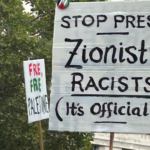
Among them is Palestine Action. In June we wrote to the Home Secretary with a detailed dossier of evidence of Palestine Action’s damage to property, disruption of business operations and threats to public safety and its impact on the Jewish community, which has borne so much of the brunt of its criminal activism.
Shortly after, the group claimed responsibility for the vandalism and sabotage of two RAF planes at a base in Oxfordshire, following which, just days after our dossier was submitted, the Home Secretary announced she would be proscribing the group. We have been at the forefront of challenging those seeking to overturn the ban.
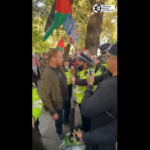
Among these are protesters that included an activist pledging his support for Palestine Action whilst impersonating a police officer outside the Houses of Parliament. He was spotted by volunteers from our Demonstration and Events Monitoring Unit – who risk their safety to monitor and document hostile events so that we can take action when the authorities do not – and was reported to police and arrested.
Securing proscriptions is only one component of maintaining bans on terrorist groups: the other is defending those bans from challenge. Earlier in the year there were ridiculous calls for Hamas to be deproscribed as a terrorist organisation. We wrote to the Home Secretary, to make the case for ongoing proscription. Within weeks, the Home Office announced that Hamas would not be de-proscribed.
Not only that, but our regulatory casework team reported Fahad Ansari, the lawyer representing Hamas’ application for deproscription, to the Solicitors Regulation Authority (SRA), after volunteers from our Online Monitoring and Investigations Unit uncovered an abundance of alarming posts from his X account. Following our complaint, the SRA confirmed an investigation.
Similarly, we reported two barristers working on the so-called ‘Hamas case’ to the Bar Standards Board (BSB), as upon reviewing the application for de-proscription, it was evident that Franck Magennis and Daniël Michaël Gruttërs knowingly or recklessly presented, on behalf of Hamas, a false and misleading description of the 7th October 2023 massacre.. We submitted a further complaint to the BSB concerning Mr Magennis’ conduct on social media. We are closely monitoring the progress of these complaints.
Our policy team also noted the Prime Minister’s decision to recognise a Palestinian State. Our Parliamentary petition has amassed thousands of signatures so far and can still be signed now to implore the Government to reverse this dangerous and premature decision that flies in the face of international norms.
Our policy work is supported by empirical data, notably our annual antisemitism barometer polling of the British public, conducted by YouGov, which showed that antisemitism has reached its highest levels on record, and our survey of the Jewish community, which we undertake directly, which this year revealed that a majority of British Jews feel that they do not have a long-term future in the UK.
2025 has been another difficult year to be a Jewish student at university.
We have submitted numerous complaints to university administrations, bringing about investigations, ranging from inappropriate guest speakers to the recurrence of hostile student chants.
In January Mohammed Al Accal, a trainee pharmacist from UCL, was sentenced in court after we alerted the police to a message that he had sent to the university’s Israel Society back in October 2023, in the wake of Hamas’ terrorist attack.
More recently, also at UCL, our Education and Outreach team helped a Jewish student who was told by the University that comments allegedly made towards her at a welcome fair that “October 7th was justified and reasonable” was not a disciplinary offence.
We also published a short documentary into Goldsmiths University, which published an unsatisfying independent report into antisemitism on its campus, detailing terrible incidents but making pitiful recommendations to address the hate.
We wrote to the University of Manchester concerning a motion passed at its Student’s Union, and we supported Jewish students who felt ostracised by the decision. Following our complaint, the motion was withdrawn.
We have continually put support for students first. But we do not wish only to support them but also to empower them. That is why our Student Ambassador Programme initiated its second cohort this year, bringing together Jewish and non-Jewish students committed to protecting the welfare of their Jewish peers on campuses across the UK.
Throughout the year we have also hosted interns in our office – many of them students or recent graduates – who have gone on to volunteer with us and remain an integral part of our organisation.
Jewish students deserve better than what their universities are delivering for them, and we will continue to support them in every way that we can.
It is not just students whom we seek to empower, but the entire Jewish community and its allies.
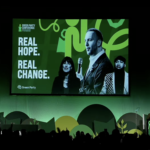
There is no better example of this than Britain’s March Against Antisemitism, which we led on 7th September and which drew an estimated 70,000 people, including MPs, peers, community leaders, and Jews and non-Jews alike.
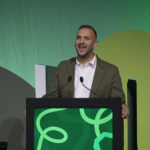
Several guest speakers addressed the crowd, including the Shadow Home Secretary, Chris Philip; Chief Rabbi Sir Ephraim Mirvis; Deputy Leader of Reform UK Richard Tice; author and journalist Jake Wallis Simons; Tali, a Jewish student at King’s College London; and Chief Executive of Campaign Against Antisemitism, Gideon Falter. It was disappointing, to say the least, that the Government failed to send a representative.
The march was widely covered in national media outlets and has led to vital policy engagement.
Our calls at the march for Britain to wake up to the threat of extremism before it is too late was tragically not heeded in time, and barely a month later, on Yom Kippur, an antisemitic Islamist terrorist attacked Heaton Park Synagogue in Manchester, leaving two Jewish men dead and stunning a country that should have seen this coming.
We led the analysis of the attack in the media and joined the Manchester vigil and the London vigil scheduled to commemorate the 7th October massacre, but which also became a memorial to the tragedy just days prior.
Once again, we gave voice to the community when we held a demonstration outside Downing Street to demand not empty words but concrete action from our Government to prevent such a tragedy from happening again. We are grateful to those who spoke, including broadcaster Julia Hartley-Brewer and journalist Camilla Tominey, as well as a friend of one of the victims.
We did so again immediately following the horrific deadly antisemitic terrorist attack on Sydney’s Bondi Beach, in which two Islamist gunmen murdered fifteen Jews at a Chanukah event. The day after the attack, Campaign Against Antisemitism, in partnership with Chabad UK, held the Light Up London event, where, outside the Houses of Parliament, we mourned the dead and, in the spirit of Chanukah, a story of defiance against antisemitism, lit the Chanukiah.
Throughout the year, we ran or joined campaigns to raise awareness of antisemitism and empower British Jews to stand up for their rights and show pride in their heritage, in defiance of a climate of antisemitism. These ranged from our “Let Your Star Shine” campaign, a collaboration with Jewish influencers following Holocaust Memorial Day earlier this year, to the Maccabi GB Community Fun Run over the summer, held in support of those in the community running for worthy charitable causes, to the AJEX Remembrance Parade and Ceremony in November, when we spoke to the public on why it was important for them to take part.
Antisemitism is manifesting across our society – from our streets and campuses to our schools and hospitals, and from our media and politics to sports and the legal profession. No matter where it arises, we will fight it, using all the means available to us under the law.
We hope that the coming year will be better for British Jews and our country, but we are preparing for worse.