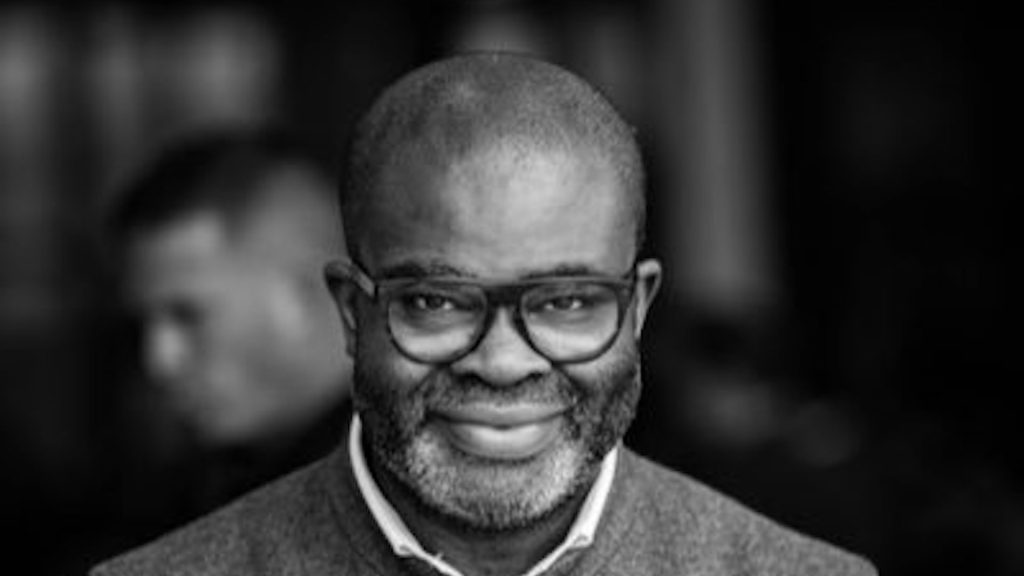
Misan Harriman, Chair of the Southbank, Europe’s largest arts centre, is a good example of how hateful political language contributes to an environment in which extremism can flourish.
He told Dazed in January 2026: “Zionism is part of a bigger, and in many ways uglier machine, which is capitalism. That’s what’s making this world so wounded.”
80% of British Jews identify as Zionist, according to our polling; only 6% do not.
He has described ‘Palestine’ as “the source code of the last functioning imperial project” and argued that ‘liberating Palestine’ would “dismantle, or at least fundamentally destabilise, the neo-colonial order,” and that “If we liberate Palestine, we liberate ourselves.”
Mr Harriman has referred to Israel as “that entity” rather than by name — language that is characteristic of certain progressive activist circles which cannot bring themselves to call the Jewish state by name. No other state seems to provoke such visceral animosity by activists.
He has drawn equations between Israel’s conduct in Gaza and the Grenfell Tower fire, saying that “it is the same greed…the same folly of man, that allowed people to burn alive in central London while children are being sniped by grown men in Gaza.”
Mr Harriman reportedly shared a post about Palestine Action activists who were on trial for aggravated burglary and on other charges in relation to a raid on Elbit Systems. They were cleared of aggravated burglary and he reportedly posted: “These verdicts put to bed the deceitful accusations from ministers that these brave activists are ‘violent criminals’.” It added: “Lift the ban on Palestine Action.” A subsequent trial found four of the six activists guilty on other charges in relation to the incident, in which a police officer’s spine had been shattered with a sledgehammer. Palestine Action is now a proscribed organisation and was at the time of Mr Harriman’s reported post.
When Iranians sent Mr Harriman messages suggesting Israel might be a liberator from the ayatollahs following protests in Iran, he reportedly dismissed them in a social media video, saying he was alarmed that “many of the folks that are DMing me videos and talking points to post have incredibly pro-Zionist leanings.” He called these correspondents “Zio-stooges” and said: “The idea that a state that is committing what I’ve just said is your Liberator is something that I will never accept.”
Mr Harriman’s exhibition, titled ‘The Purpose of Light’, reportedly included photographs of Holocaust survivors expressing solidarity with Palestine, which he used to argue for the “indivisibility of human experience” and to draw “structural continuities” between different forms of oppression.
According to the International (IHRA) Definition of Antisemitism, “drawing comparisons of contemporary Israeli policy to that of the Nazis” is an example of antisemitism.
Following the high-profile antisemitic attack in Golders Green in April — in a context of a serious wave of antisemitic incidents across London including arson attacks on synagogues — Mr Harriman shared a post by independent MP Ayoub Khan querying why a Muslim victim allegedly of the same attacker had reportedly not been mentioned in police communications or mainstream media coverage. To some, this seemed like it risked deflecting attention from antisemitism at an acutely sensitive moment. Supporters of Mr Harriman argued that he was simply pointing out a factual omission, noting his statement: “Antisemitism has no place in our society”.
Most recently, after Reform UK’s strong local election results in early May, Mr Harriman posted an Instagram video quoting photographer Susan Sontag and writer Kurt Vonnegut on the psychology of support for the Nazi regime in 1930s Germany, calling the Reform surge “a warning and a rallying call”. This equation risked trivialising the Nazi regime and the Holocaust. Harriman denied the comparison, saying that he was discussing human behaviour and community-building.
The Prime Minister in his recent statement acknowledged the increasing and unwarranted intimidation faced by Jewish people in the arts and cultural spaces – which should be welcoming and inclusive to all. They should not be venues for exclusionary or even extremist political discourse which makes these spaces uncomfortable for Jewish attendees.
That starts with the people in charge of those spaces.
We will be writing a letter to the Southbank Centre.